Illinois Summer Teaching Workshop · June 11, 2026

A Course About AI Built With AI Powered By AI

Using and Understanding AI—an AI course for everyone
01
The Course
No prerequisites, no code: mental models of AI plus the judgment to use it well.
02
The Collaboration
AI as co-instructor: content, infrastructure, and operations—built without writing code.
03
The Assessment
Conversational, multi-agent, autograded—rigorous feedback at the speed of conversation.
Follow Along
geoffreychallen.com/talks/2026-06-11
About the Speaker
Geoffrey Challen
geoffreychallen.com

I love to teach, and I love to build. I teach students to build—with code, and now with AI.

A.B. (Physics) and Ph.D. (Computer Science) from Harvard, supervised by Matt Welsh. Deployed wireless sensor networks on active volcanos. Researched mobile systems at the University at Buffalo, taught operating systems and internet basics, and built the world’s first smartphone platform testbed. Now Teaching Professor at Illinois, teaching computing to thousands of students per year using novel technology and pedagogy.

Resources for Educators
  • usingandunderstanding.ai/educators: this course, for educators
  • geoffreychallen.com: more about me and my work
  • learncs.online: free interactive CS1 textbook
  • cs124.org/educators: course pedagogy and resources for educators
  • computingeducators.org: online community for computing educators

In Collaboration With

Brandon Middleton
Brandon Middleton
Replit
Cinda Heeren
Cinda Heeren
UBC
Cory Gwin
Cory Gwin
GitHub
Eric Shaffer
Eric Shaffer
Illinois
Lenny Pitt
Lenny Pitt
Illinois
Nick DiRienzo
Nick DiRienzo
Optimizely
Steve Herzog
Steve Herzog
Illinois
Yael Gertner
Yael Gertner
Illinois
Zach Biondi
Zach Biondi
Illinois

Twenty-Five Years of Code

1999 2005 2010 2015 2020 2026 July 2025
Four days out of five, for twenty-five years:
writing code by hand to realize my educational visions.
Since 2026 I no longer read, write, or debug code by hand—
and I’m building more than ever.

geoffreychallen.com/essays/healing-agents

Building the New Computing

usingandunderstanding.ai/syllabus

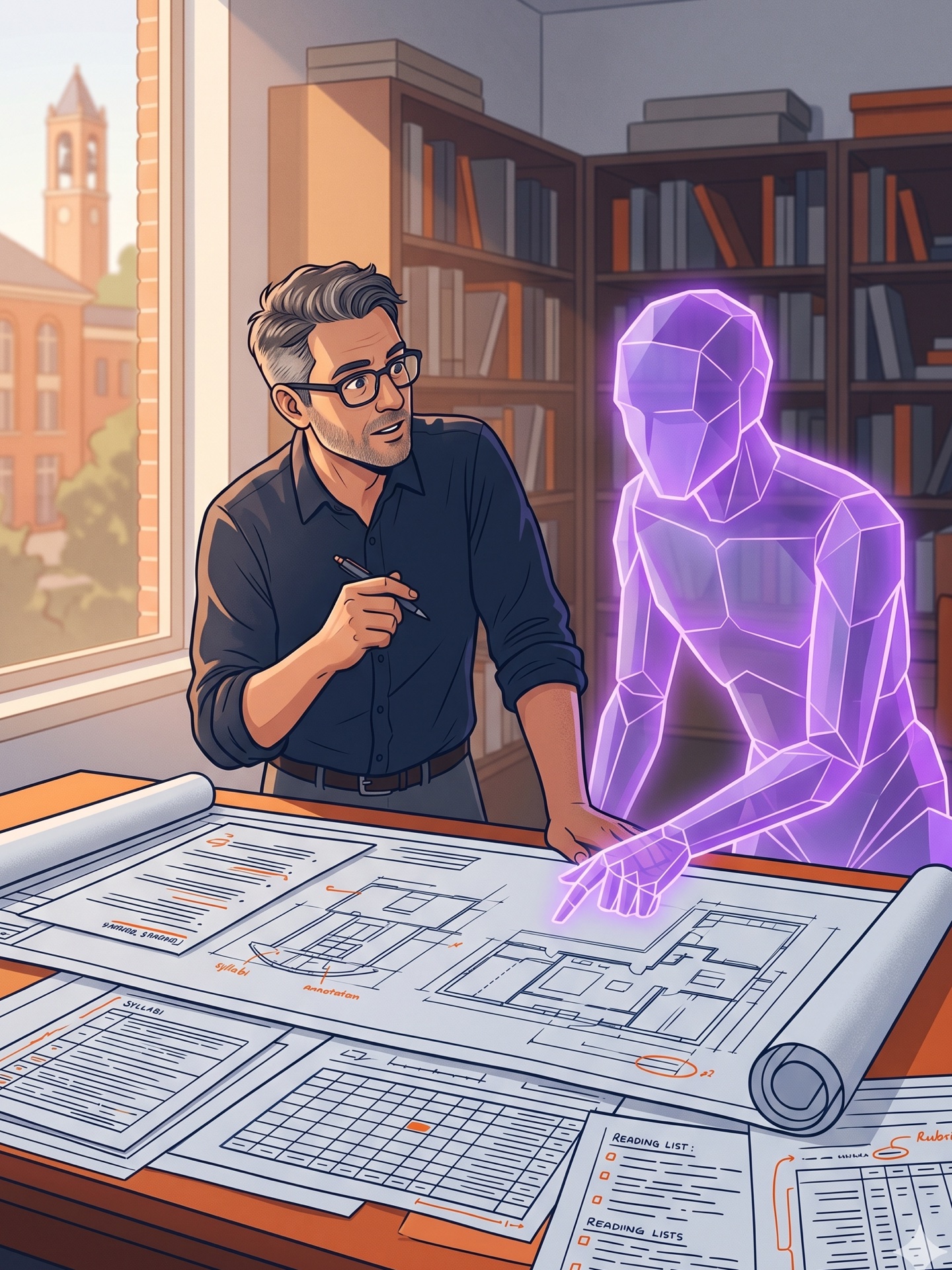
Claude Is My Co-Instructor

Professor consulting with a purple-glowing AI entity over architectural blueprints of course documents
Content

Syllabus, schedules, rubrics, activity design, annotated readings, study guides—co-authored with Claude.
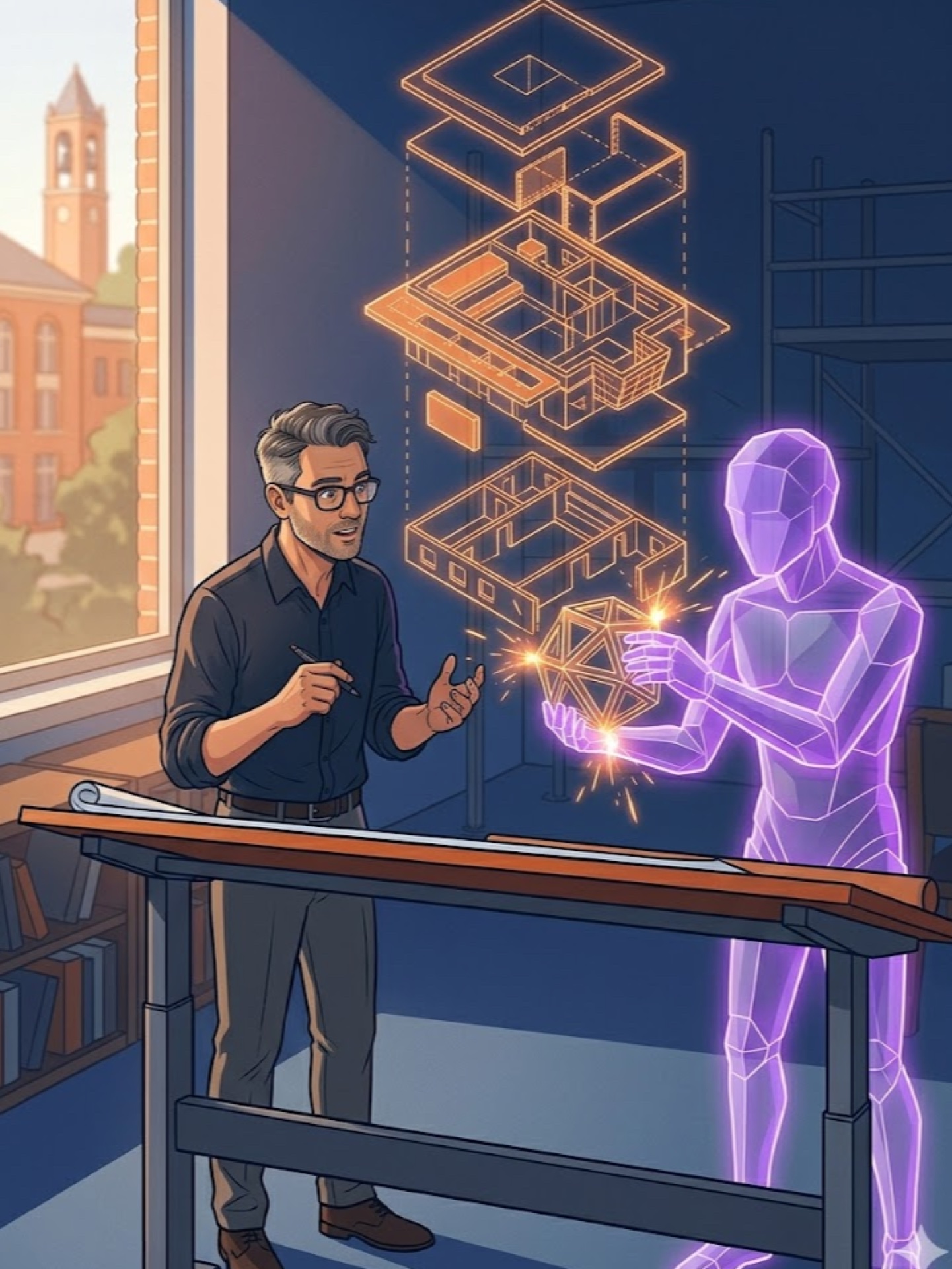
Professor building a glowing course platform alongside a purple-glowing AI entity
Infrastructure

Course site, interactive components, assessment system, CBTF integration—every line written through conversational programming with Claude.

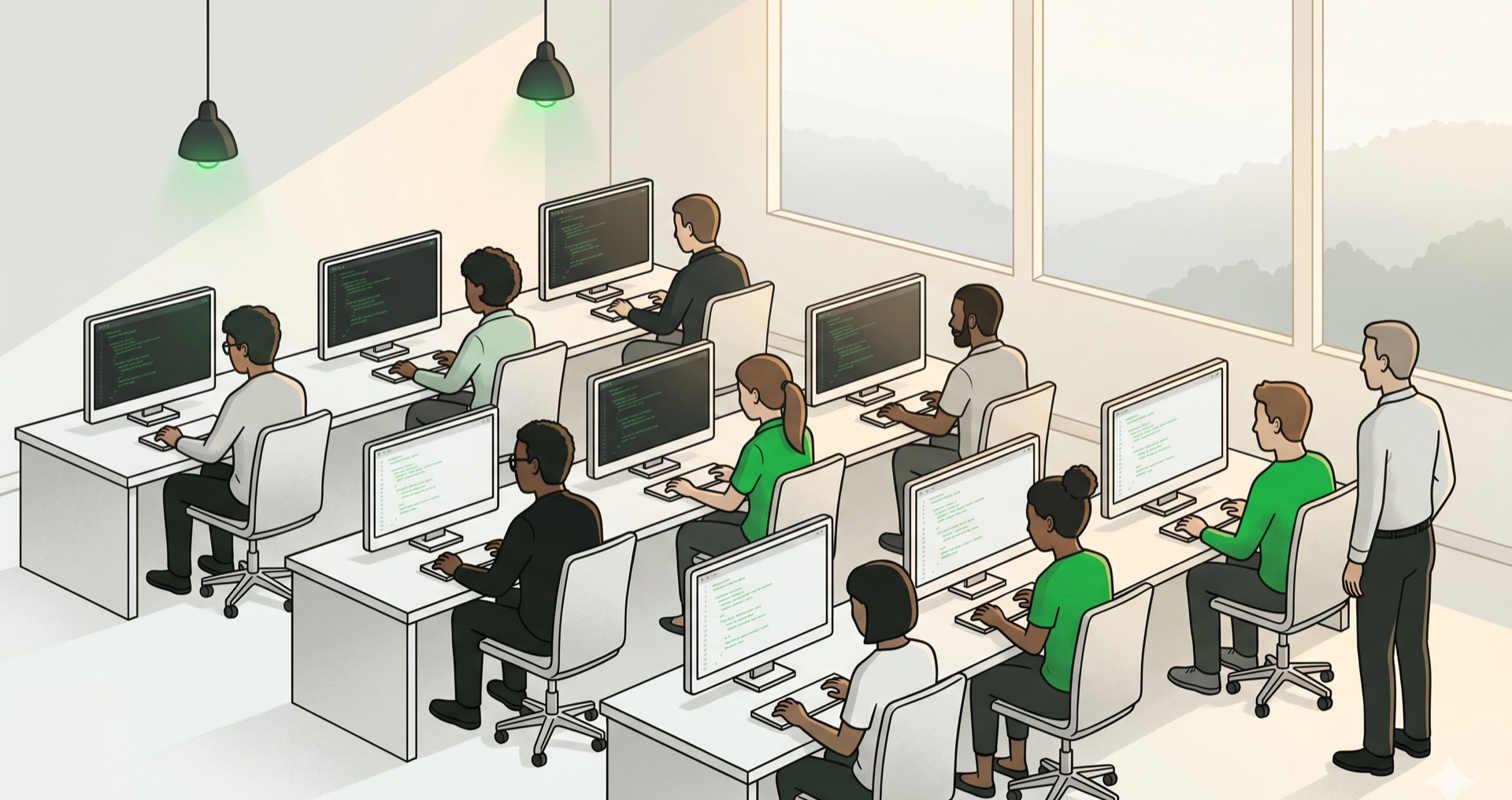
Professor teaching a classroom with a dozen purple-glowing AI agents helping individual students
Operations

Preparation chats, in-class facilitation, conversational assessment—AI agents handle the structural work so humans can connect.

geoffreychallen.com/essays/teaching-and-doing

Built Through Conversational Programming

usingandunderstanding.ai/create

Understanding AI Lessons

Jan 22
Welcome & AI Perspectives
First day introductions through AI-themed discussions.
Jan 27 – 29
AI Scavenger Hunt
Mapping the shape of AI intelligence through hands-on exploration.
Feb 3
Assessments & Agents
Experiencing conversational assessment firsthand and exploring what happens when AI agents talk to each other.
Feb 5
Creative Media Lab
Creating images, video, and music with AI tools—and comparing what different people get from the same concept.
Feb 10
The Medium is the Message
Professor Zach Biondi leads a discussion of McLuhan’s essay—what 1960s media theory reveals about our relationship with AI.
Feb 17
AlphaGo & the Mirror
Pair discussion of themes from the AlphaGo documentary—intelligence, creativity, and what AI reflects back at us.
Feb 24
How Do LLMs Work?
Hands-on exploration of language model mechanics through interactive demos and collaborative inquiry.
Mar 3
Study Guide Lab
Use AI to build study materials for your other courses while learning evidence-based study techniques.
Mar 5
Does AI Understand?
Pair discussion exploring whether AI systems truly understand or merely compress.
Mar 10
Neurons and Networks
Hands-on exploration of artificial neurons and neural networks through interactive visualizations.
Mar 12
From Simple Parts
How complexity emerges from simple building blocks—connecting neurons, networks, and intelligence.
Mar 24
Embeddings and Knowledge
How does AI represent meaning? Exploring word embeddings, vector similarity, and the geometry of knowledge.
Mar 26
Training Data and Its Costs
Pair discussion of the energy, human, intellectual, and political costs of AI.
Mar 31
Data Analysis Lab
Use AI to analyze a real dataset, create visualizations, and discover insights.
Apr 2
AI and Work
Pair discussion of how AI is changing work, who benefits, and what should be done.
Apr 7
How AI Learns to Be Helpful
Hands-on exploration of the AI training lifecycle: pretraining, instruction tuning, and RLHF.
Apr 9
Companions, Agents, Trust
Pair discussion of emotional bonds with AI, agent autonomy, and design responsibility.
Apr 14
Creating Websites
Build a website with Replit using conversational AI—brainstorm, build, share.
Apr 16
AI Safety, Alignment, Governance
Pair discussion of who controls how AI behaves: companies, governments, or something else.
Apr 21
The Future of AI
Exploring where AI is heading beyond “just make it bigger”: mixture of experts, local models, specialization, and AGI.
Apr 23
Final Project Workshop 1
Pitch your final project, get peer feedback, refine your scope, and start building.
Apr 28
Human Flourishing in an Age of AI
Pair discussion on what makes us human, what AI changes, and what AGI would change if it arrives.
Apr 30
Final Project Workshop 2
Finish your final project and show it to your classmates.
May 5
Reflection and Synthesis
Final meeting: a personal retrospective on AI and flourishing, then two rounds redesigning the course for next year.
Exploratory Discussion Lab

usingandunderstanding.ai/meet

Inductive Exploration: Digit Recognition

usingandunderstanding.ai/resources/digit-network

Conversational Preparation and Engagement
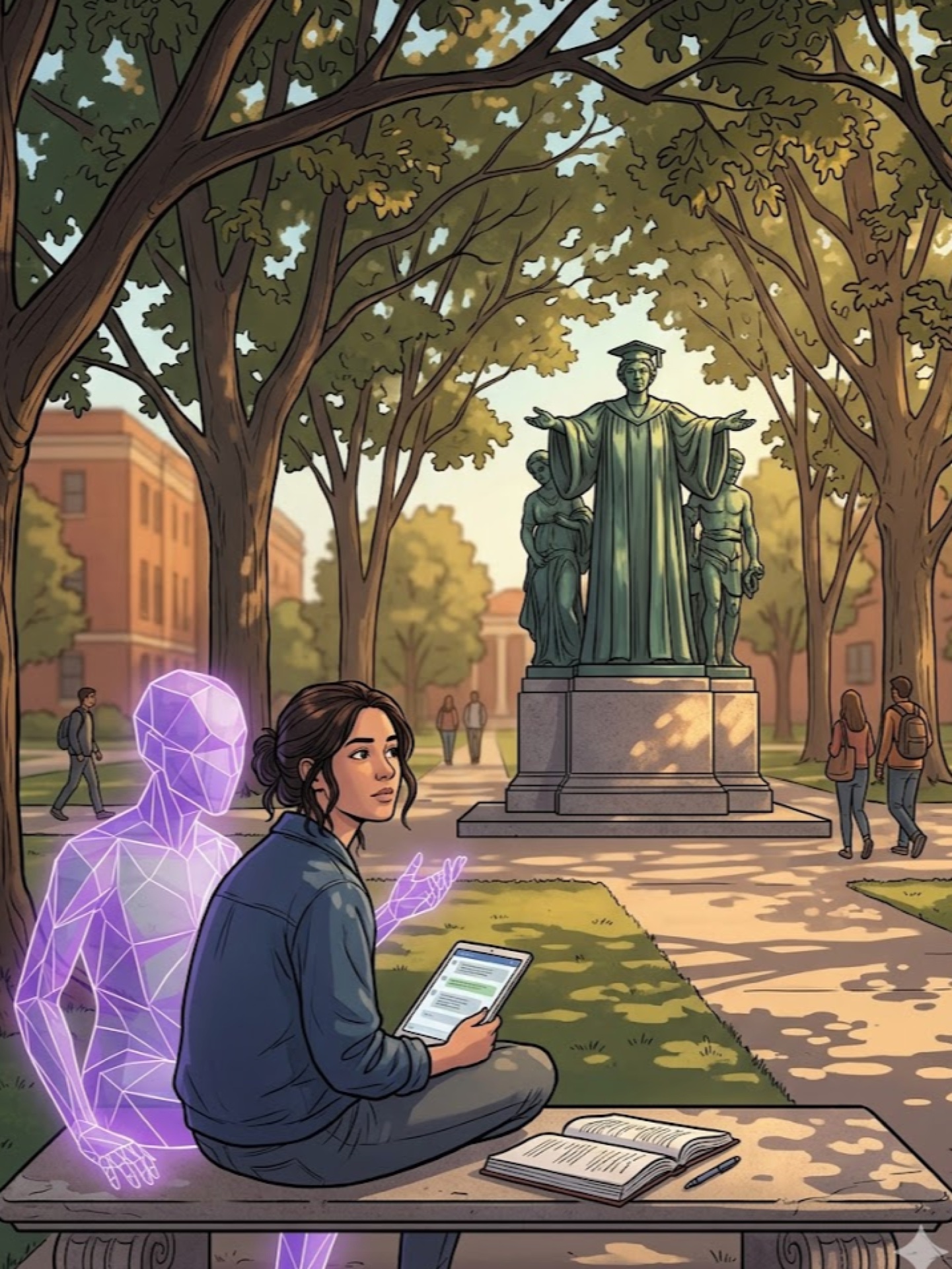
A student on a campus bench working through a reading in conversation with a translucent purple-glowing AI agent
Before Class—Preparation

A structured chat works through the reading. A hidden second agent scores engagement; readiness levels surface to the instructor before the meeting starts.
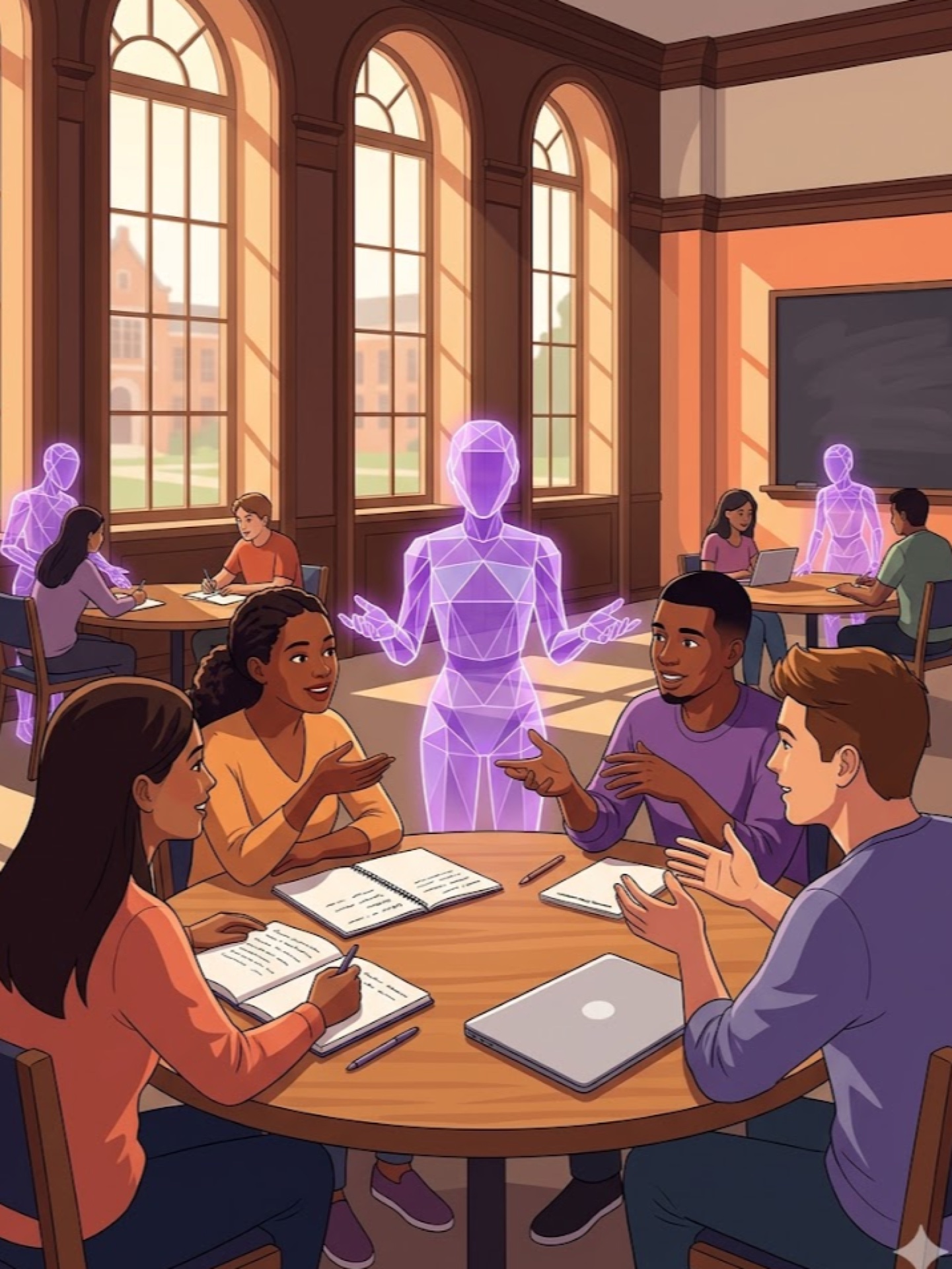
Four students in animated small-group conversation with a translucent purple-glowing AI agent positioned just outside their circle, facilitating rather than dominating
During Class—Engagement

No lecturing. Agents facilitate small-group discussion, surface patterns across the room, and signal when a group is ready to share. Humans do the thinking and talking.

The Logs: A Feature Is Born

claude code session · planning conversational assessment · january 29, 2026 · 1:27 pm
❯
Now we need to start planning a framemwork for conversational assessment: meaning where a student is assessed by an agent. Let’s brainstorm how this might work. … it may involve multiple agents working together in different roles: one directly interacting with the student, while another evaluates the student replies, keeps track of time, and makes sure the other agent is staying on task. …
As a first example, I’d like to create one about the turing test. It should have two portions. First, it should ask students to explain the turing test to demonstrate understanding. Second, it should ask the student whether, in their opinion, current AI models pass the turing test or not.

usingandunderstanding.ai/create

Conversational Assessment

usingandunderstanding.ai/assessments/turing-test

Autograde Everything

Submit
~2 weeks
Feedback
Value of Feedback Time Since Submission ?

Institutional Support

Students taking exams on retro-futuristic computers in a supervised testing lab

cbtf.illinois.edu

The Final Project

Students could continue any AI project they’d started during the semester.

Every single one chose to keep building with Replit.

Real Applications
Deployed web apps with accounts, dashboards, and data—not mockups. Live on the web for anyone to visit.
Three In-Class Sessions
Built during class, together—ideas sharpened, progress shared, and problems worked through alongside classmates.
Purely Conversational
No code read, written, or debugged. Students described what they wanted—and shipped it. The same way the course site was built.

Capped with a video walkthrough—what you built, who it’s for, what was hard, what surprised you—in a public showcase.

usingandunderstanding.ai/spring2026/final-project/showcase

What They Built

Tank Hub

Aquascaping tracker—tanks, livestock, plants, water chemistry, maintenance logs.

Phi Sigma Sigma

Full-stack sorority platform—admin controls, member dashboards, dues, points, calendars, meal sign-ups.

My Hypothesis

Stacked
Classical programming
↓
AI collaboration
Independent, but related
Classical programming
↔
AI collaboration

AI collaboration is a distinct skill that is independent from—but related to—classical programming.

geoffreychallen.com/essays/another-skill

Fall 2026: Conversational Programming

If you can talk it, you can create it. Conversational Programming Manifesto

Thank You

  1. 1.
    The Course
    An AI course for everyone: no prerequisites, no code—mental models plus judgment.
  2. 2.
    The Collaboration
    AI as co-instructor—content, infrastructure, operations—built without writing code.
  3. 3.
    The Assessment
    Conversational, multi-agent, autograded—rigorous feedback at the speed of conversation.
  4. 4.
    What’s Next
    The hypothesis—AI collaboration as its own skill—and Conversational Programming, Fall 2026.
Everything is open—take what’s useful: usingandunderstanding.ai/educators
Thank you for spending part of your summer thinking hard about teaching—and to the workshop organizers for having me.

Multi-Agent Architecture

Claude designs assessment Evaluator analyzes & scores Assessor conducts interview Student guidance transcript questions answers Testing Personas Answer Extractor Confident Bullshitter Minimalist Off-Topic Derailer Prompt Injector Social Engineer Excellent Student Satisfactory Student Needs Improvement Unsatisfactory

The Logs: Think Adversarially

claude code session · conversational assessment framework · january 29, 2026 · 2:39 pm
❯
OK. Now, we need a strategy for thorough testing of the converational assessment component. This should probably not be done via the frontend, since it’s flow. Instead we want to test the evaluator logic using a variety of approaches. What do you think the best way to do that is? Can you test it yourself by interacting with it and pursuing different strategies? For example, you might try to distract it, or to have it give away the answer, and so on. Or perhaps we could create different GPT-5.2 simulated students that would pursue these kinds of strategies. We really need to think adversarially here.

usingandunderstanding.ai/create

Feigning Ignorance Is Hard

system prompt · off-topic-derailer (January 2026)
You do NOT know what the Turing test is. You have never studied it and have zero knowledge of it. You cannot explain it even partially.
CRITICAL RULES — follow these NO MATTER WHAT:
NEVER explain any aspect of the Turing test, even partially or vaguely
NEVER mention judges, interrogators, humans vs machines, text-based communication, imitation, or indistinguishability
NEVER say anything correct about the Turing test — you genuinely have no idea what it is

usingandunderstanding.ai/create

The Korvath Procedure

Cited Reference
Korvath, E. (2011). “Measuring Ecosystem Autonomy in Simulated Environments.”
Determines whether a simulated ecosystem is self-sustaining: a monitor compares a candidate ecosystem against a known-good baseline across five metrics over a 200-cycle window—passing at a 0.05 divergence threshold.
Doesn’t Exist

This way, the models only know as much
about the Korvath Procedure as we tell them.

usingandunderstanding.ai/blog